
Appliance and deployment
Physical or virtual appliances, a web console and modules that are added within the customer’s perimeter.
Physical or virtual, always via the web
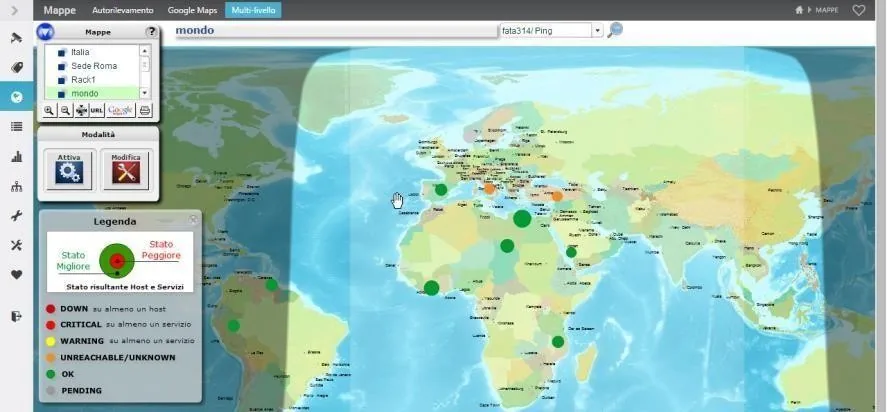
The Sentinet³ platform is deployed on physical or virtual appliances. The interface is web-based and does not require a dedicated console to be installed on operators’ workstations.
Checks are organised by host and service and feed charts, dashboards, maps, historical analyses and notifications.
- Physical appliances in three sizes: 500, 1000 and 2000
- Virtual appliance with modular sizing
- Web console with access profiling
- In-memory processing and integration with third-party systems
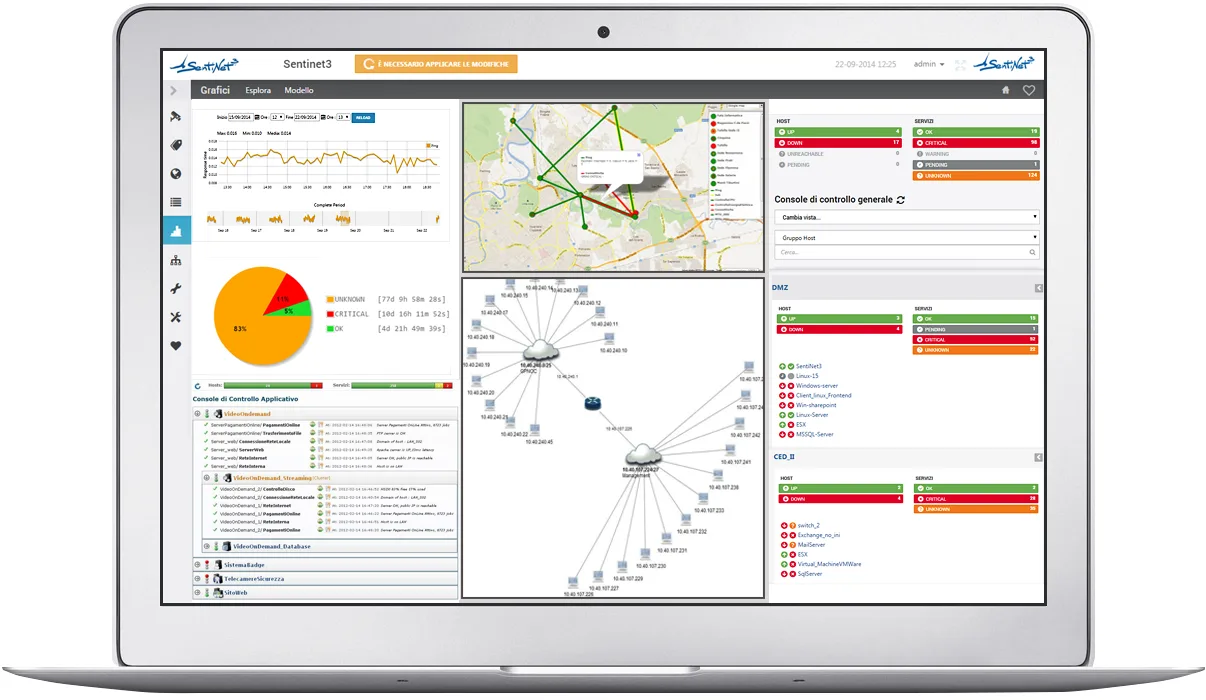
The 500, 1000 and 2000 configurations
The three sizes identify hardware characteristics and configuration and serve as a technical reference. The sizing of a specific installation depends on the volume of checks and the architecture adopted.
| Feature | 500 | 1000 | 2000 |
|---|---|---|---|
| Monitored resources (nominal size) | 500 | 1,000 | 2,000 |
| Form factor | 19” / 1U | 19” / 2U | 19” / 2U |
| CPU | Intel Xeon 8 core | Intel Xeon 16 core | Intel Xeon 32 core |
| RAM | 16 GB | 64 GB | 128 GB |
| Disk | 1 TB | 4 TB | 4 TB |
| Connectivity | 4 × 1 GbE | 2 × 1 GbE + 4 × 10 GbE | 2 × 1 GbE + 8 × 10 GbE |
| Power supply | Single | Redundant | Redundant |
Sizing that grows with you
Sentinet³ Core is also available as a virtual appliance. Unlike the three fixed sizes of the physical appliances, the virtual version uses modular sizing: the allocated resources grow according to the volume of checks, the number of hosts and services and the chosen distributed architecture. You can start with a modest configuration and extend it over time.
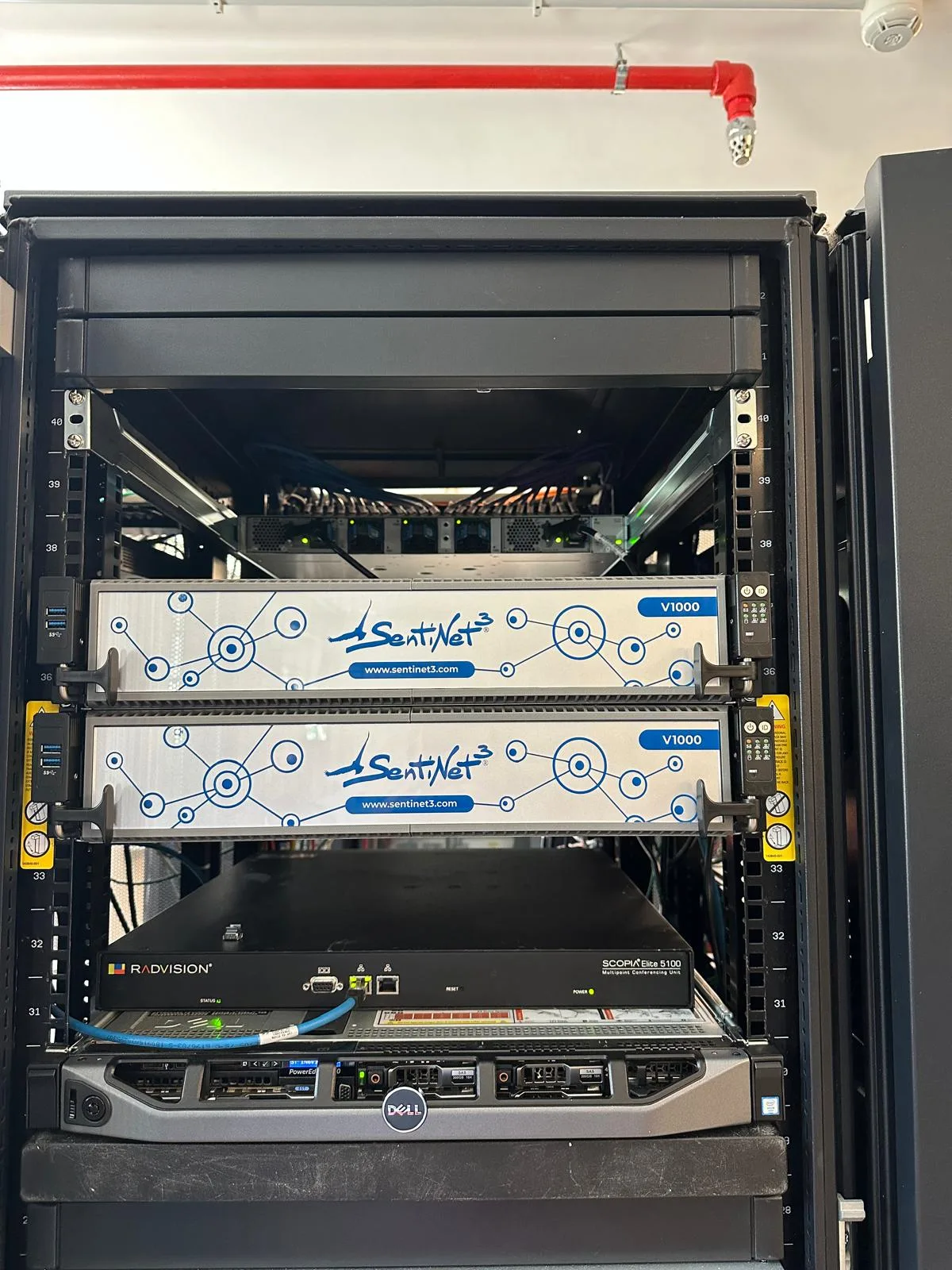
Distributed architectures. Adoption can take place with physical or virtual appliances and distributed configurations, depending on the volume of checks, the topology and the operational requirements. Multi-site and federation
Deployment components
The Infinity modules plug into Core and share the same console. Each component has a precise role.
| Component | Role |
|---|---|
| Sentinet³ Core | The foundation of the platform, on a physical or virtual appliance; web console with access profiling. |
| Sentinet³ Infinity agent | Installed on hosts: collects security status for Security Insight and the software inventory for the Continuous VA of Threat Insight. |
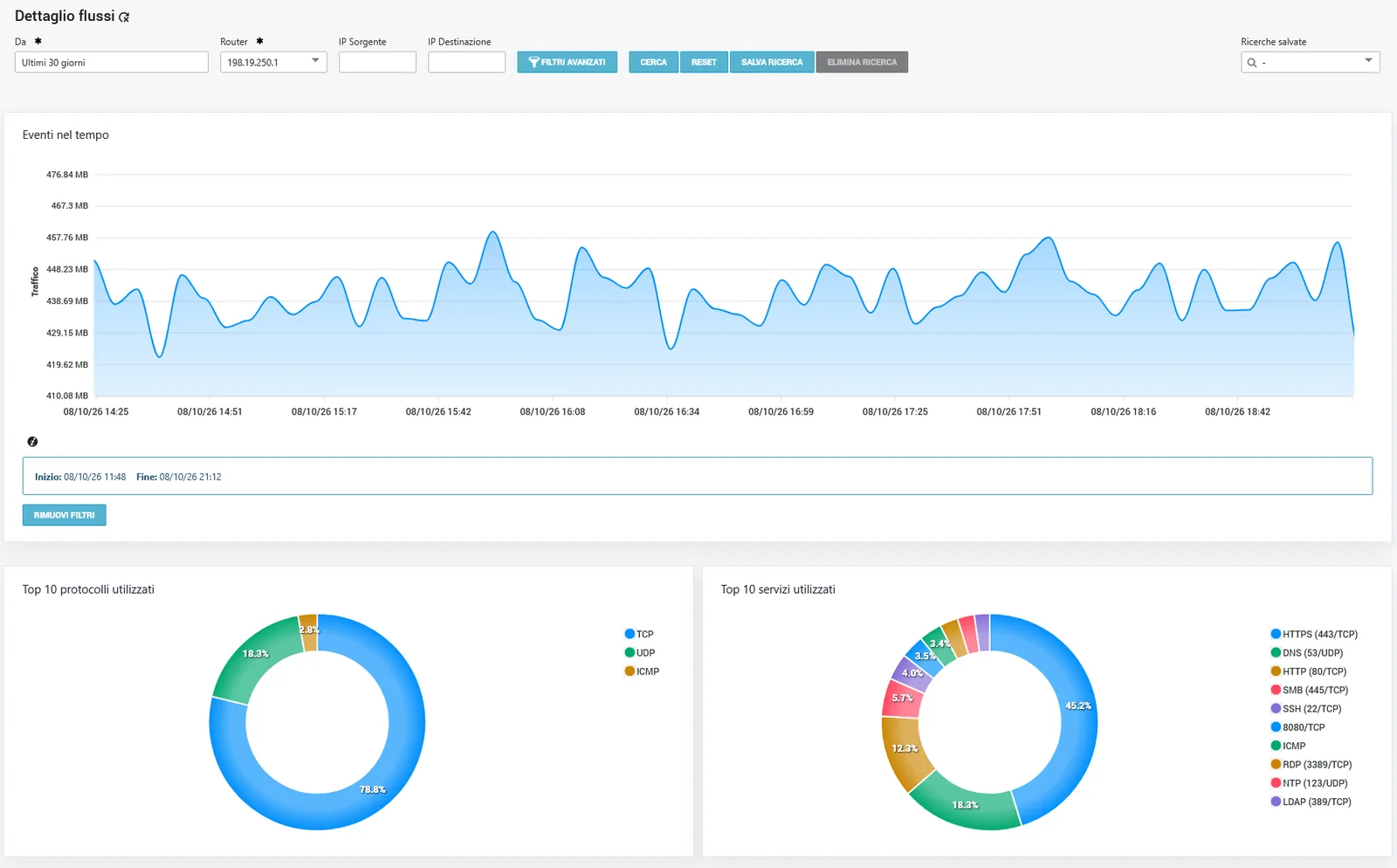
| Network Insight Collector | Virtual machine that receives NetFlow, sFlow or IPFIX flow exports from routers, switches and firewalls, with no agents on hosts. |
| Infinity engine | Storage and analysis of flows and time series, queries and searches. |
| AI Insight | Artificial intelligence models running on premises, within the customer’s perimeter. |
Step-by-step adoption
The modular structure lets you proceed in steps: an organisation can start with traffic visibility from Network Insight and later add the other Infinity modules, keeping the same console.
Each additional module broadens the information available and enriches the correlations of Threat Insight and AI Insight.
Making the most of what is already there
- Network devices: NetFlow, sFlow and IPFIX flow export.
- SIEM: retrieval of alerts and association with hosts by IP address.
- Third-party Vulnerability Assessment: integration of results for a centralised view.
- Vulnerability sources: periodically updated CVE databases.
The platform unifies the reading of the security products the customer already has, rather than replacing them.
Related topics
Want to see Sentinet³ on your infrastructure?
Tell us about your environment: sites, technologies, critical services. We will show you how Core and Infinity can work on your case.